



By Muhammad Haniff Hassan
Fellow, RSIS-NTU
This article is an abridged English translation of the original Malay article.
Introduction
One of the social challenges Singapore will face increasingly in the coming years is an ageing population. This is the result of declining birth rates and longer life expectancy arising from improvements in various aspects of life. The Muslim community is not exempt from this trend. It too will experience an increasing proportion of older people and therefore needs to prepare for the implications of ageing.
Understanding Islam’s perspective on ageing is important for several reasons. First, many Muslims will want to know how Islam guides individuals and communities in responding to the challenges associated with ageing. Second, religious values can provide a positive source of guidance in addressing these challenges. Third, an Islamic perspective can help ensure that initiatives for older people are consistent with the values of Singapore's Muslim community. Finally, Islamic institutions such as mosques, madrasahs and religious scholars can contribute to addressing ageing within the Muslim community and, in doing so, contribute to wider national efforts.
Islam was revealed as a comprehensive guide for human life and is described in the Qur’an as a religion consistent with human nature. Ageing is therefore a natural phenomenon within the human life cycle and one that deserves religious reflection.
This article explores some foundational Islamic ideas concerning ageing. It does not attempt to provide an exhaustive treatment of the subject. Rather, it seeks to establish a framework upon which individuals and Muslim institutions can develop appropriate responses to the challenges of ageing. This continues a long tradition of Islamic scholarship. Classical scholars devoted attention to old age and the treatment of older people, while contemporary Muslim scholars have produced works on elderly care, their rights, health, spirituality and social welfare.
Ageing in the Qur’an
The Qur’an discusses ageing in several places and provides important foundations for understanding it.
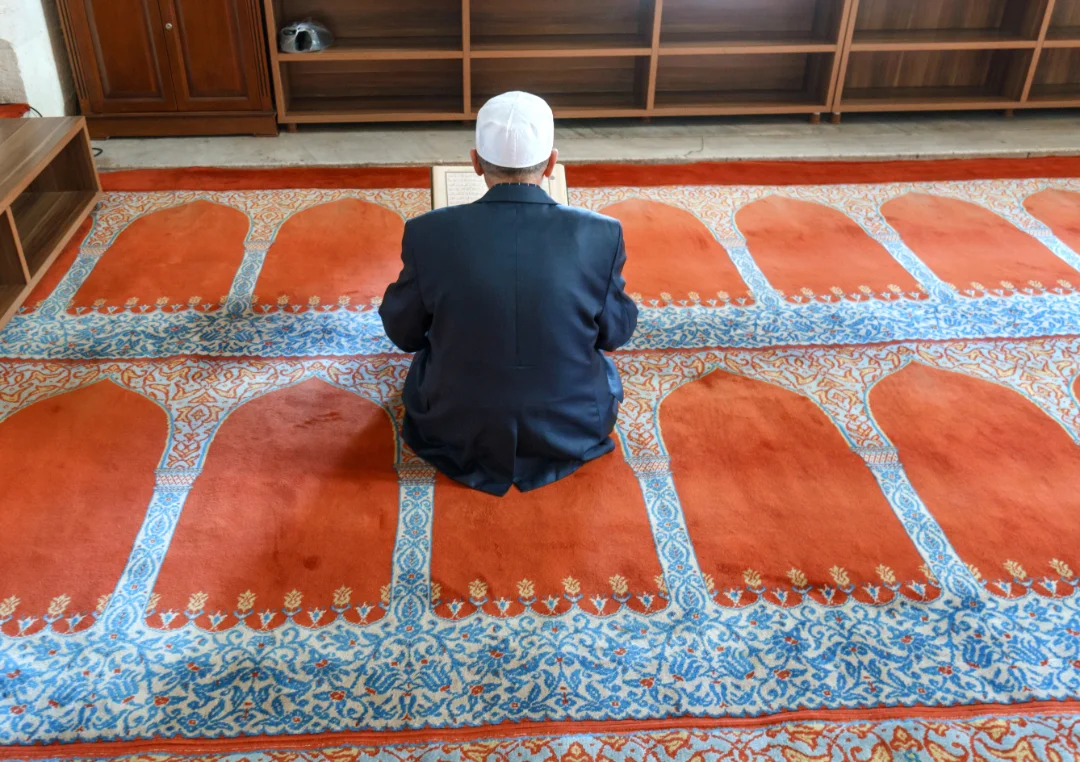
First, ageing is presented as a natural stage of human life. Allah Ta`ala says:
“He is the One Who created you from dust, then from a sperm-drop, then from a clinging clot, then He brings you forth as infants, then He lets you reach maturity, and then to become elderly—though some of you die sooner—and reach a specified term so perhaps you will understand.” (Ghafir, 40:67)
Similarly, Allah Ta`ala says:
“Allah is the One Who created you from weakness, then developed strength after weakness, then developed weakness and grey hair after strength.” (ar-Rum, 30:54)
The Qur’an therefore presents human life as a progression from weakness to strength and eventually back to weakness. Not everyone reaches old age because death may occur earlier, but ageing remains a natural possibility within the human life cycle.
Second, the Qur’an draws attention to the physical and cognitive changes that may accompany old age. These include grey hair, declining physical strength and deterioration in memory and intellectual capacity. Allah Ta`ala describes some people as being returned to “the weakest state of life” so that they no longer know what they once knew (al-Hajj, 22:5; an-Nahl, 16:70). Some scholars have understood this as referring to advanced old age accompanied by frailty, dementia and dependence on others.
The Qur’an also refers to the decline of fertility in old age. Prophet Zakariyya AS described his bones as weakened and his head as covered with grey hair (Maryam, 19:4), while the wife of Ibrahim AS expressed astonishment at the prospect of giving birth despite her advanced age (Hud, 11:72).
These verses do not mean that every older person must experience severe physical or cognitive decline. Rather, they identify conditions that may accompany advanced age. Contemporary knowledge and lived experience show that people age differently, and many older people remain physically and intellectually capable well into later life. The severity of age-related decline can also be influenced by various factors and may, in some cases, be prevented, treated or minimised.
The Qur’anic discussion of ageing therefore serves another important purpose: it encourages Muslims to think about ageing before it arrives.
The Significance of Preparation
The Qur’an identifies the age of forty as an important point for reflection:
“…when he reaches maturity and forty years of age, he says, ‘My Lord! Inspire me to always be thankful for Your favours You have blessed me and my parents with, and to do good deeds that please You. And instil righteousness in my offspring. I truly repent to You and I am one of those who submit.’” (al-Ahqaf, 46:15)
The reference to forty can be understood as an important stage of life at which a person should reflect upon the past and prepare for what lies ahead. It is therefore appropriate to regard ageing not merely as something that happens to people in their later years, but as a process for which preparation should begin earlier.
The Qur’an also repeatedly connects the stages of human life with the certainty of death. This is particularly evident in verses following the discussion of human development in Ghafir, 40:67 and al-Hajj, 22:5. Ageing should therefore remind people that life is temporary and that death and the Hereafter are certain.
At the same time, preparation for death and preparation for old age are not identical. Death can occur at any stage of life, whereas ageing is a process that some people will experience. Muslims should therefore prepare for death throughout their lives while also preparing, where possible, for the challenges of old age.
A Positive Attitude towards Ageing
Islam does not portray old age only in terms of decline and vulnerability. The Prophet SAW encouraged Muslims to regard longevity positively.
Long life can be an opportunity for greater goodness and spiritual achievement. The Prophet SAW said:
“The best of people is the one who has a long life and whose deeds are good.” (Narrated by at-Tirmidhi)
Longer life can therefore mean more opportunities to worship Allah Ta`ala, repent, perform good deeds and benefit others.
Old age is also associated with dignity and respect. The Prophet SAW said:
“He is not one of us who does not show mercy to our young ones and respect our elders.” (Narrated by al-Bukhari)
Another hadith states that respecting an elderly Muslim is among the ways of honouring Allah Ta`ala. These teachings establish that older people should not be viewed merely as dependants or as people whose productive contribution has ended. They possess dignity and deserve respect by virtue of their status as human beings and members of the community.
Continuing Religious Responsibility
Although old age may bring physical weakness and illness, it does not remove a Muslim’s fundamental responsibility towards Allah Ta`ala. Human beings are created to worship Him, and this responsibility continues until death.
However, Islam recognises the limitations associated with ageing. It provides legitimate concessions (rukhsah) when physical ability declines. A person may pray sitting or lying down, when necessary, refrain from fasting when genuinely unable to do so and, under the relevant conditions, appoint someone to perform hajj on their behalf.
Thus, ageing does not mean abandoning religious practice. Rather, worship should be adapted to one’s changing physical circumstances within the framework established by Islamic law.
Old age is also an appropriate period for introspection, repentance and spiritual preparation. The Prophet SAW warned that a person who is granted a long life has been given considerable opportunity to reflect and change. A hadith mentions sixty years as an age by which a person has had sufficient opportunity to take heed. The point is not that repentance becomes impossible after a particular age, but that increasing age should intensify one’s awareness of the limited time remaining.
The objective should therefore be to approach the end of life with sincere repentance, continued worship and a good ending (husn al-khatimah).
Islam Encourages Proactive Preparation
Although ageing is unavoidable, Islam does not encourage passivity. Muslims are expected to plan and manage their lives responsibly. Allah Ta`ala says:
“O believers! Be mindful of Allah and let every soul look to what deeds it has sent forth for tomorrow. And be mindful of Allah, for certainly Allah is All-Aware of what you do.” (al-Hashr, 59:18)
Although this verse primarily concerns preparation for the Hereafter, its broader principle of looking ahead and preparing for the future is also relevant to worldly affairs.
The story of Prophet Yusuf AS provides another example. When he interpreted the king’s dream as a warning of seven years of famine, he did not merely accept the coming crisis passively. He proposed a detailed strategy for storing grain and managing resources. The preparation enabled Egypt to withstand the crisis and even become a source of assistance to neighbouring regions.
Prophet Muhammad SAW likewise demonstrated careful planning, including during the hijrah and military campaigns. These examples illustrate an important principle – the fact that something is unavoidable does not mean that its negative consequences cannot be reduced.
A well-known hadith states:
“Take advantage of five before five: your youth before your old age, your health before your illness, your wealth before your poverty, your free time before your being busy, and your life before your death.” (Narrated by al-Hakim)
The first three items are particularly relevant to ageing. Youth, health and financial resources should be used wisely before their decline. This provides a basis for thinking about physical health, financial planning and other preparations for later life.
The Prophet SAW also sought Allah Ta`ala’s protection from ardhal al-`umr, an advanced state of old age associated with weakness and cognitive decline. Such supplications should not be understood as encouraging passive reliance upon God. In Islamic thought, supplication is accompanied by appropriate effort. Seeking protection from a condition can therefore also imply taking reasonable steps to reduce its risk and consequences.
True tawakkul combines effort with reliance upon Allah Ta`ala, as expressed in the well-known hadith:
“Tie it and then put your trust in Allah.” (Narrated by al-Tirmidhi)
Three Key Areas of Preparation
Worship and spiritual companionship
Planning and support in later life
Healthy living and medical care
| Spirituality | Economic Security | Health |
|---|---|---|
| Worship and spiritual companionship | Planning and support in later life | Healthy living and medical care |
From the Qur’an, Sunnah and Islamic scholarship, three areas deserve particular attention when preparing for ageing: spirituality, economic security and health.
1. Spirituality
Spiritual preparation is essential because religious responsibility continues throughout life and because death becomes increasingly proximate as one ages.
Programmes for older Muslims should therefore include opportunities for worship, Qur’anic learning, reflection, repentance and spiritual companionship. They should also provide practical guidance on how to perform religious obligations when physical ability declines.
This is an area in which mosques and Islamic organisations can make a distinctive contribution. Government programmes may provide valuable social and health services, but Islamic institutions can complement them by addressing the spiritual needs of older Muslims.
2. Economic Security
Financial preparation is another important aspect of ageing. Islam emphasises care for relatives, the poor and those who are unable to support themselves. It also encourages Muslims to make prudent use of wealth.
The instruction to take advantage of one’s wealth before poverty arrives provides a basis for financial preparation. Saving for retirement, managing expenditure and avoiding excessive debt are therefore consistent with the broader Islamic emphasis on responsible stewardship.
Support should also be available for older people who lack sufficient financial resources. Islamic social welfare institutions, including zakat and charitable mechanisms, can play an important role in this area.
3. Health
Health is closely connected with ageing. The Prophet SAW’s instruction to make use of one’s health before illness and his supplications seeking protection from weakness and advanced frailty demonstrate the importance of preserving one’s physical wellbeing.
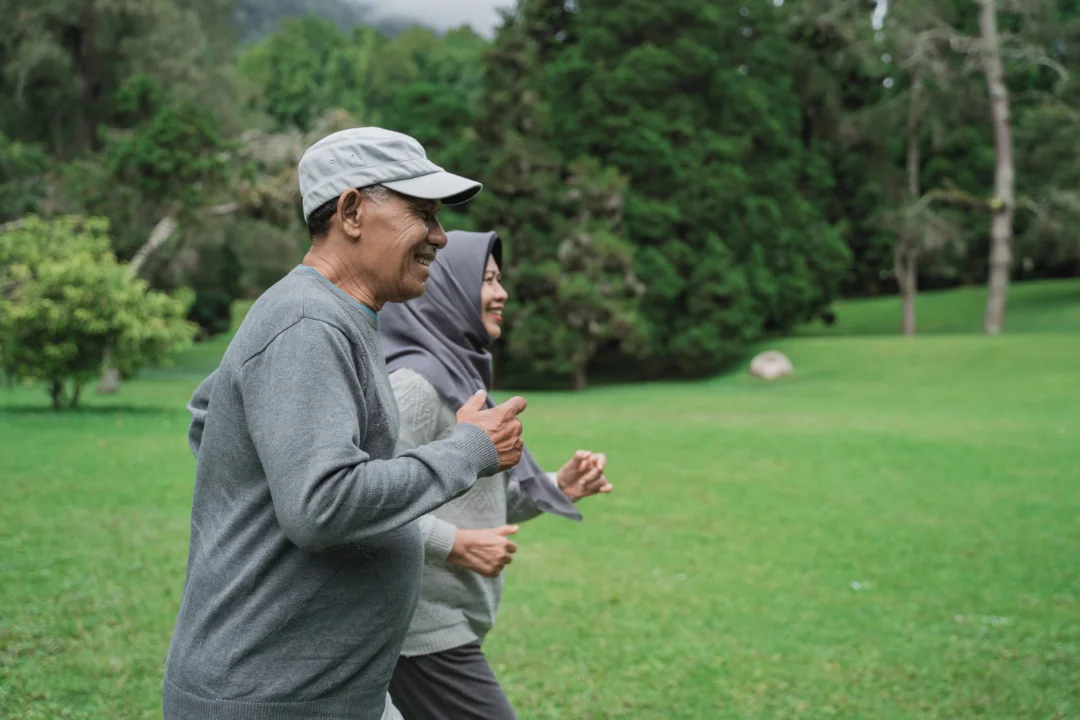
Muslims should therefore be encouraged to maintain healthy lifestyles and seek appropriate medical care. Preventing or delaying avoidable deterioration is not contrary to acceptance of Allah Ta`ala’s decree. Rather, it represents responsible management of the abilities and resources that Allah Ta`ala has provided.
Who Is Responsible?
Islam places responsibility for ageing at several levels: the individual, the family, the wider community and the state.
The individual has the primary responsibility to prepare for old age. Each Muslim should plan for the physical, spiritual and financial realities that may accompany later life, while avoiding arrangements that unnecessarily burden others.
The family has a responsibility to support older relatives who are no longer able to care adequately for themselves. The Qur’an repeatedly commands Muslims to treat their parents well, particularly when they reach old age (al-Isra’, 17:23–24; Luqman, 31:14–15). Children therefore have a particularly important responsibility towards ageing parents. Spouses and other relatives also have obligations according to their circumstances and ability.
The wider Muslim community also has a collective responsibility. Caring for vulnerable older people falls within the broader Islamic obligations of birr, khayr, ma`ruf and mutual assistance. The Qur’an commands Muslims to cooperate in righteousness and piety (al-Ma’idah, 5:2). The welfare of older people should therefore not be regarded as a private family matter alone.
In Singapore, Muslim self-help organisations such as Muhammadiyah, Jamiyah and Pertapis have already contributed to social welfare. Mosques can also be mobilised to complement these efforts and provide programmes that address the spiritual, social and practical needs of older Muslims.
The state has an important responsibility as well. Islamic history provides examples of public authorities supporting older people who were unable to sustain themselves. The principle is that those who cannot adequately care for themselves should not be abandoned.

In Singapore, the government already undertakes extensive planning and provides services for an ageing population. Muslim organisations and mosques should therefore make appropriate use of these existing resources while contributing services that address needs specific to the Muslim community. MUIS also has an important role through its responsibilities concerning zakat and Muslim welfare.
Conclusion
Ageing is a natural part of human life, but Islam does not encourage Muslims to approach it passively. The Qur’an recognises the physical and cognitive changes that may accompany old age while reminding human beings of the temporary nature of life and the certainty of death.
At the same time, Islamic teachings provide a positive understanding of longevity. A long life can provide greater opportunities for worship, good deeds, repentance and service to others. Older people possess dignity and are entitled to respect and care.
Islam also encourages proactive preparation. Individuals should make reasonable preparations for the spiritual, health and economic challenges of later life. Families have responsibilities towards ageing relatives, while the wider Muslim community carries a collective obligation to protect the welfare of vulnerable older people. The state also has an important role in ensuring that those who cannot adequately support themselves are not neglected.
For Singapore’s Muslim community, ageing should therefore be approached as both a challenge and an opportunity. It is a challenge because ageing may involve declining health, financial vulnerability, dependency and changing social circumstances. It is an opportunity because longer life can provide additional time for worship, learning, service and preparation for the Hereafter.
Mosques and Islamic organisations should consequently develop programmes that integrate spiritual care with health, social and economic support. Such efforts would not merely respond to demographic change. They would also fulfil an important Islamic principle: that the welfare and dignity of older people are a shared responsibility of individuals, families, communities and institutions.
See also
Related Articles
Developing Excellent People, Building Excellent Institution: An Islamic Foundational Perspective on Mosque Leadership

A Malay Word in the Qur'an: Examining Pak Hamka's Interpretation of Kafur in 76:5