


By Ustaz Dr Muhammad Haniff Hassan
Fellow, S. Rajaratnam School of International Studies, Nanyang Technological University Singapore
This article is translated and improved from a Malay article titled 'Beberapa Faktor Asas Bagi Kepimpinan Masjid', published in Cahaya Menara Biru, An-Nur Mosque's 45th Anniversary Commemorative Book (2025).
Introduction
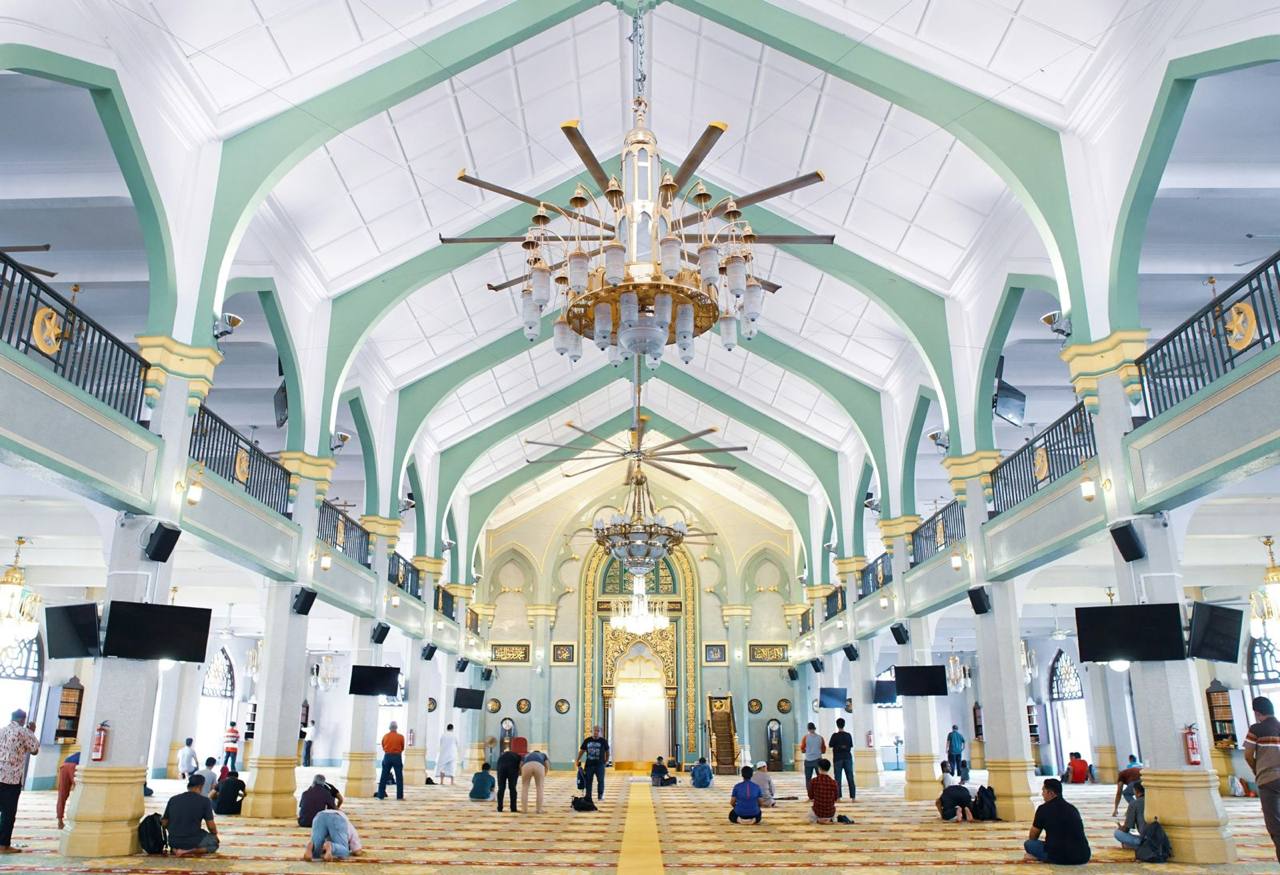
Mosques occupy a central place in the religious and social life of the Muslim community. Considerable resources are invested in building and maintaining them, reflecting both their material value and their importance as institutions for nurturing a righteous Muslim community. Yet the quality and effectiveness of a mosque ultimately depend not merely on its physical facilities, financial resources or programmes, but on the people entrusted with running it.
For this reason, developing the human resources of the mosque should be regarded as a fundamental priority. This includes not only equipping its volunteers, professional staff and management with the knowledge and skills necessary to perform their responsibilities, but also nurturing the spiritual and moral qualities required to discharge their amanah. Among these qualities, taqwa, sincerity, discipline, humility and a commitment to serving the community are particularly important.
Effective mosque leadership therefore requires an integrated approach in which competence is developed alongside character and spiritual formation. The objective is not simply to produce competent mosque administrators, but people who are spiritually grounded, morally trustworthy and capable of fulfilling the responsibilities entrusted to them.
Starting with the Human Factor
The foundation of an excellent mosque institution is righteous people and programmes. Righteous people produce righteous programmes, while righteous programmes produce righteous people. But where do we begin? This may seem like the proverbial question of which came first, the chicken or the egg.
The answer has already been stated in the Qur'an:
“It is not for the polytheists to maintain the mosques of Allah while witnessing against themselves with disbelief. Their deeds have become worthless, and in the Fire they will abide eternally. The mosques of Allah are only to be maintained by those who believe in Allah and the Last Day, establish prayer, give zakah and fear none but Allah. It is they who are expected to be rightly guided.” (at-Tawbah 9:17–18)
“Do not stand for prayer within it—ever. A mosque founded on righteousness from the first day is more worthy for you to stand in. Within it are men who love to purify themselves; and Allah loves those who purify themselves.” (at-Tawbah 9:108)
Both passages indicate that maintaining and developing a mosque begins with people. In the time of the Prophet PBUH, it began with the Messenger himself. He developed righteous programmes that produced righteous Companions, and from the Companions emerged others who maintained and developed mosques in different places.
The verses also explain what must be present in those who seek to maintain and develop mosques. The most important quality is not a management qualification or experience in a senior position, but taqwa.
Although the absence of taqwa is not the only cause of problems in mosques, it is among the principal causes. Its absence gives rise to slander, disputes, loss of sincerity and other obstacles to realising the mosque as an excellent institution. Worse still, these failings neglect the religious trust and wealth entrusted by the Muslim community.
An important human factor that ensures the righteousness of a mosque is the leadership that directs and oversees it.
Leadership – An Important Human Factor
Islam places great importance on leadership in every sphere of life. The Prophet PBUH said:
“If three people set out on a journey, they should appoint one of them as their leader.” (Narrated by Abu Dawud)
If leadership is necessary for a small and temporary journey, it is even more essential in managing a mosque and attending to the affairs of the wider Muslim community. Three foundational principles underpin effective Islamic leadership within a mosque institution.

1. Leadership is a universal responsibility
Every individual is, or will inevitably become, a leader in some capacity. The Prophet PBUH said:
“Each of you is a shepherd and each of you is responsible for his flock. A leader of the people is a shepherd and is responsible for his flock. A man is a shepherd over the people of his household and is responsible for his flock. A woman is a shepherd over the household of her husband and is responsible for her flock. A servant is a shepherd over the property of his master and is responsible for his flock. Surely, each of you is a shepherd and each of you is responsible for his flock.” (Narrated by al-Bukhari and Muslim)
Every Muslim should therefore be prepared to shoulder leadership responsibility and cultivate the capacity to lead.
2. Leadership is taklif, not tashrif
Leadership must be understood as a taklif—a responsibility—rather than a tashrif—an honour. The Prophet PBUH cautioned Abu Dharr:
“O Abu Dharr! You are weak, and authority is a trust. On the Day of Resurrection it will be a cause of humiliation and regret, except for one who takes it with its due rights and fulfils the obligations pertaining to it.” (Narrated by Muslim)
Leadership is an amanah carrying obligations before Allah, not a status to be enjoyed for its own sake.
3. Leadership should not be actively sought
The Prophet PBUH said:
“Indeed, we do not appoint to this position one who asks for it, nor one who is eager for it.” (Narrated by al-Bukhari)
This does not mean that one may never offer oneself for responsibility when the interests of Islam genuinely require it. Prophet Yusuf a.s. said:
“Appoint me over the storehouses of the land. Indeed, I will be a knowing guardian.” (Yusuf 12:55)
Islam discourages pursuing leadership for personal gain, but it encourages believers to cultivate leadership qualities and readiness. This is reflected in the Qur'anic supplication:
“Our Lord, grant us from among our wives and offspring comfort to our eyes, and make us an example for the righteous.” (al-Furqan 25:74)
The Companions embodied this balance. They approached leadership with humility, yet discharged it with excellence once entrusted with responsibility. This was possible because the Prophet PBUH deliberately developed their character and leadership capacity. He sent Ali RA to Yemen as his representative, appointed Mu'adh RA as a judge in Yemen, and designated Companions as commanders of expeditions.
For people seeking to contribute to mosque leadership, and for mosque leaders developing the next generation, three practical steps are needed:
Classical scholars identified two essential conditions for leadership: quwwah—the competence, skill and knowledge required to perform a task effectively—and amanah—the integrity and trustworthiness required to perform it in accordance with the will of Allah. The Qur'an affirms both:
“Indeed, the best one you can hire is the strong and the trustworthy.” (al-Qasas 28:26)
Two Essential Conditions for Leaders
Quwwah
The competence, skill and knowledge required to perform the task effectively
Amanah
The integrity and trustworthiness required to perform it in accordance with the will of Allah.
Strength to lead. Trust to serve.
Lessons from Congregational Prayers
The success of mosque leadership also depends on how fully its leaders embody the philosophy of congregational prayer, the defining practice of a mosque. This philosophy includes sincerity, 'ubudiyyah or servitude to Allah, adherence to established rules and conditions, obedience to the imam, order, discipline and mutual responsibility.
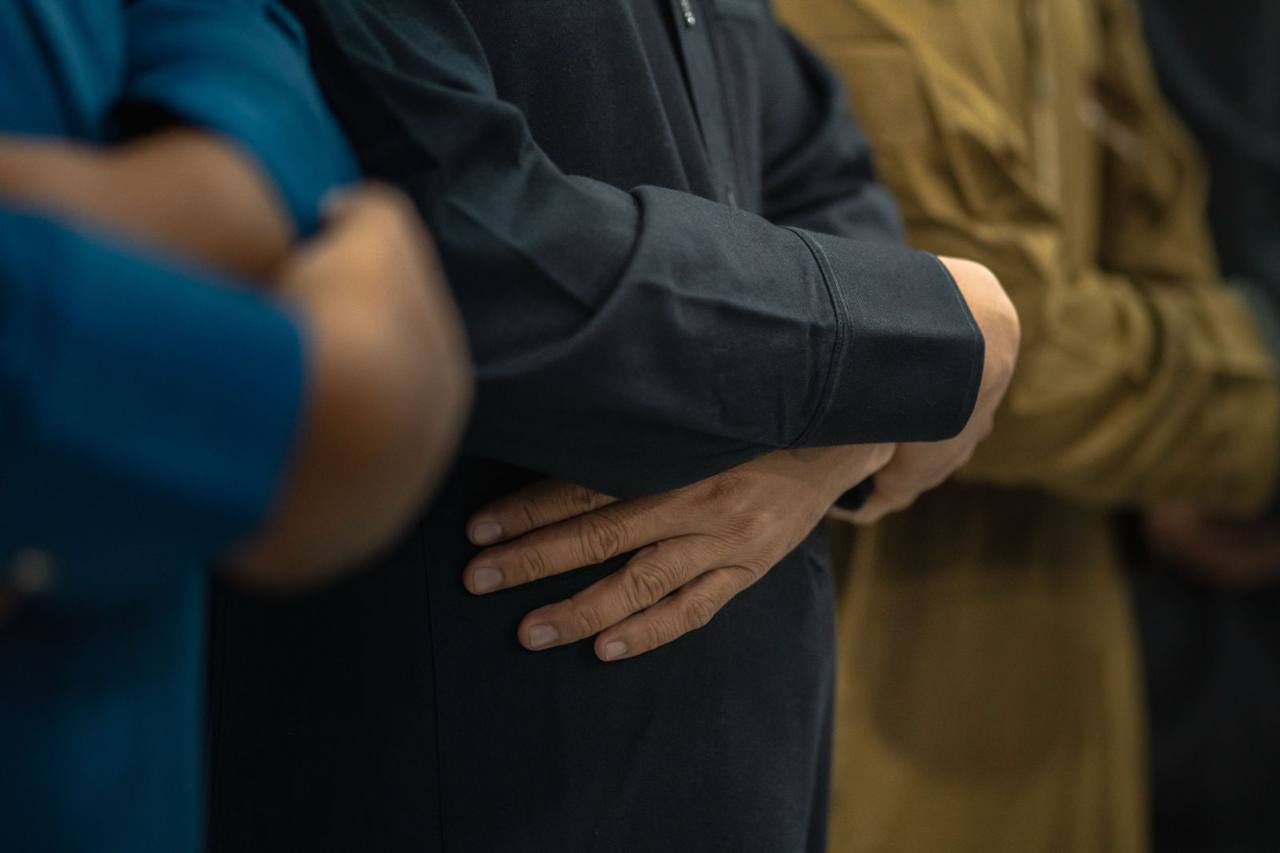
Congregational prayer offers an organisational blueprint. Worshippers form orderly rows, follow a shared direction and move together under an imam. At the same time, obedience is not blind: when the imam makes an error, the congregation has a duty to correct it. Leadership and followership are therefore joined by rules, accountability and a common purpose centred on Allah.
If those responsible for maintaining and developing the mosque fail to internalise these values, the mosque will struggle to fulfil its role. The development of people who embody the values of congregational prayer should therefore be a central objective of mosque programmes.
Yet a paradox can emerge. Congregational prayer teaches unity, but a mosque may become a battleground for confrontation and disputes. Noble work can become mixed with personal agendas. Anonymous accusations, efforts to undermine individuals or groups, jealousy, envy, resentment and arrogance may appear among administrators or between institutions.
The Qur'an warns that even a building outwardly called a mosque may be used to cause harm:
“And there are those who took for themselves a mosque for causing harm, disbelief and division among the believers, and as a station for whoever had warred against Allah and His Messenger before. They will surely swear, ‘We intended only the best.’ And Allah testifies that indeed they are liars.” (at-Tawbah 9:107)
Masjid ad-Dirar is a sobering reminder that impressive outward form is no guarantee of inward integrity. A mosque built or led without sincerity can become a source of division rather than guidance. Intellectual ability and management skills alone are not enough; spiritual purity is indispensable.
Process and Means
Spiritual purity cannot be achieved without continuous tarbiyyah and tazkiyyah, whether undertaken by individuals or by the institutions responsible for appointing and developing mosque administrators.
Human-resource development in mosques should not be confined to professional competencies, technical skills and organisational capabilities. It should incorporate systematic and structured programmes of tarbiyyah and tazkiyyah that nurture the spiritual and moral qualities required of those entrusted with the mosque.
…in developing mosque leadership talent…it should also incorporate systematic and structured programmes of tarbiyyah and tazkiyyah to nurture the spiritual and moral qualities required of those entrusted with the mosque.
These programmes should encompass everyone who contributes to the mosque: board and management members, professional staff and volunteers. Each group may carry different responsibilities, but all share in maintaining and developing the institution. All therefore need appropriate opportunities for continuous spiritual and moral formation.
A structured approach ensures that spiritual development does not depend solely on personal initiative or occur only on an ad hoc basis. Mosque institutions should provide regular opportunities for:
This process must be continuous. Tarbiyyah and tazkiyyah should not be treated merely as induction activities for a new appointment. New volunteers and staff need orientation and spiritual formation, while existing leaders and personnel need ongoing programmes that deepen religious understanding and strengthen character.
In this way, tarbiyyah and tazkiyyah become part of the institutional culture. Management training develops the capacity to perform responsibilities, while spiritual formation develops the character and disposition with which those responsibilities are carried out. Both are necessary. Competence without spiritual formation may produce an efficient but self-serving administrator; spiritual aspiration without knowledge and skill may produce a sincere but ineffective administrator.
Mosque human-resource development should integrate both dimensions. Its goal is to produce people who possess the quwwah to perform their responsibilities effectively and the amanah to discharge them in accordance with the will of Allah.
Conclusion
The excellence of a mosque ultimately begins with the quality of its people. Sound management, professional competence and effective programmes are important, but they cannot substitute for the taqwa, sincerity and integrity of those entrusted with the mosque. Leadership must be understood as an amanah, rather than an honour or a position to be sought.
An excellent mosque is therefore not built merely through facilities and programmes, but first through the cultivation of excellent people.
Professional and leadership development must therefore be integrated with systematic tarbiyyah and tazkiyyah. Board members, staff and volunteers alike require continuous opportunities to develop both competence and character. When those who serve the mosque are properly nurtured, they are better equipped to fulfil their responsibilities with quwwah and amanah.
Ultimately, the task before us is as much internal as it is institutional. We must build an excellent mosque within ourselves—in our sincerity, character and sense of amanah—before an excellent mosque institution can truly be established upon our earth.